
News
Orexca: “Islamic Civilization Center in Uzbekistan”
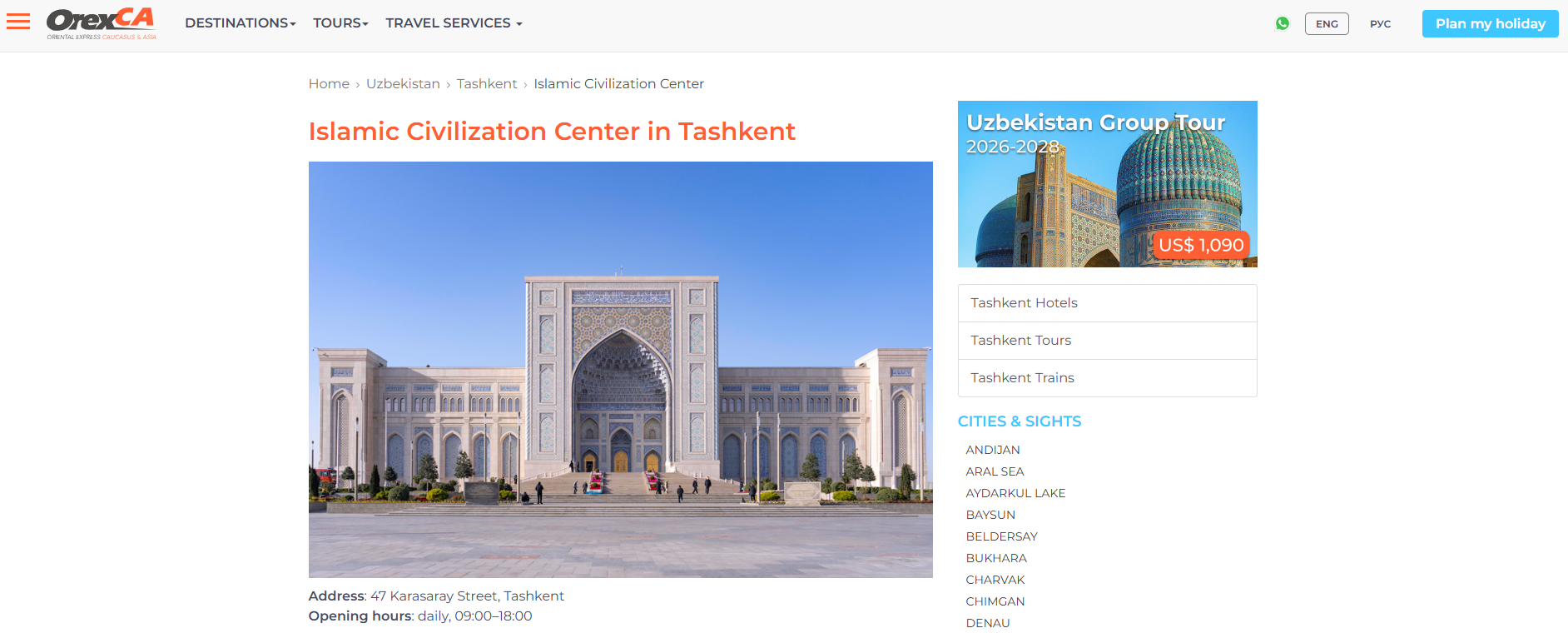 Orexca, a platform specializing in travel across Uzbekistan and Central Asia, has given special attention to the Islamic Civilization Center in Uzbekistan. According to the publication, the Center is one of the largest cultural and scientific projects of the 21st century, combining centuries-old heritage with modern technologies and serving not only as a museum, but also as an important platform for education and international dialogue.
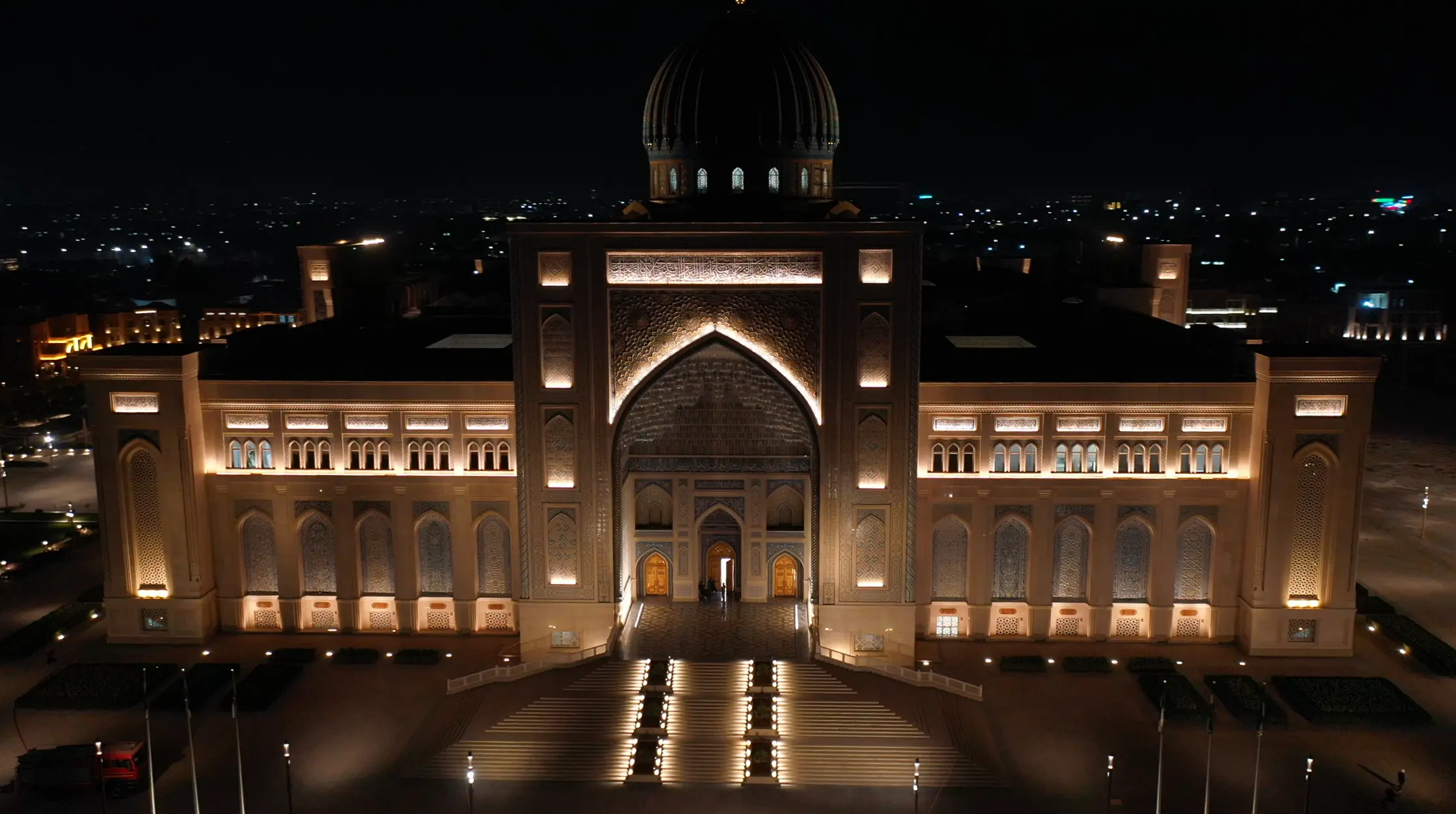
The Islamic Civilization Center is considered one of Uzbekistan’s largest cultural projects of the 21st century. It was created not as an ordinary museum, but as a major scientific and educational complex that integrates centuries-old heritage with modern technologies. Beneath the building’s massive dome lies approximately 15,000 square meters of exhibition space. At the heart of the complex is one of the most sacred relics of the Islamic world — the Qur’an of Caliph Uthman dating back to the 7th century. The Center is conveniently located for visitors exploring Tashkent, situated next to the famous Hazrati Imam complex.
History of Creation
The idea of establishing the Islamic Civilization Center was proposed in 2017 by the President of Uzbekistan, Shavkat Mirziyoyev. The project was designed to create a unified space that showcases the region’s contribution to global science and culture, while also serving as a platform for research and education.
Construction works were carried out between 2017 and 2025, involving hundreds of architects, engineers, craftsmen, and restorers. The architecture of the complex is inspired by historic cities such as Samarkand, Bukhara, Khiva, Kokand, and Termez. The distinctive styles of these cities are reflected in the overall composition and decoration of the building.
During the project, international scientific institutions, museums, and cultural organizations also joined. Unique manuscripts and artifacts were returned to Uzbekistan and added to the Center’s collection. The complex was officially opened on March 17, 2026.
Exposition
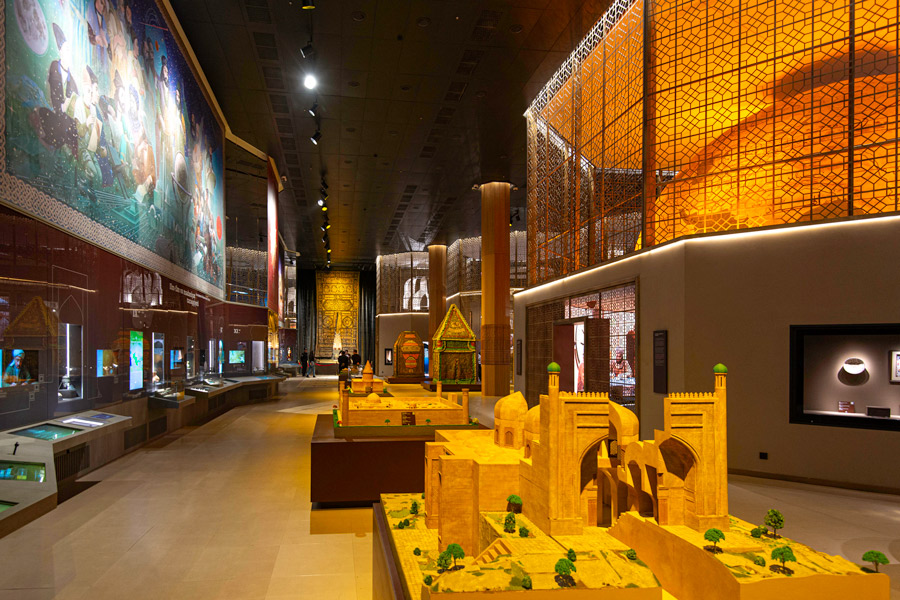
The museum fund of the Center contains more than 2,000 exhibits, including household items, tools, manuscripts, books, archaeological findings, and works of applied art. The exposition is divided into four thematic halls:
• Pre-Islamic period
• First Renaissance
• Second Renaissance
• New Uzbekistan
At the center of the complex is the Qur’an Hall.
 Pre-Islamic Period
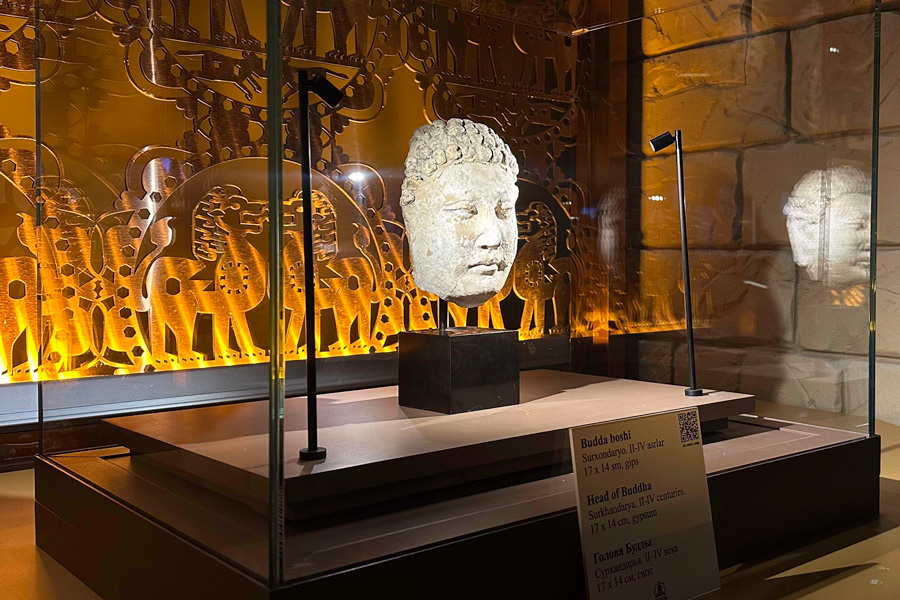
This hall serves as the starting point of the exposition, covering history from ancient times up to the 7th century. It features archaeological findings, petroglyphs, ritual objects, and early writing samples.
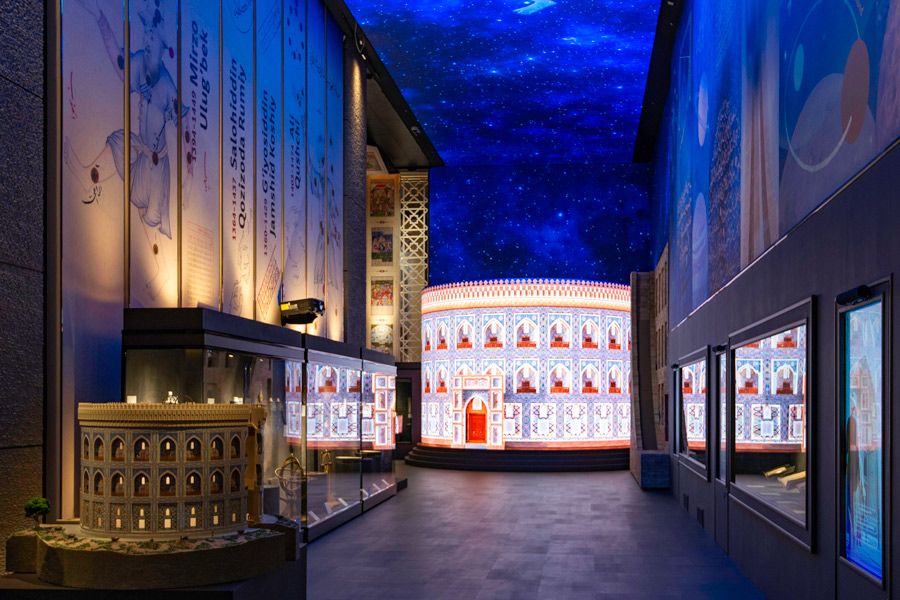
The most striking part of the hall is the “Wall of Civilizations and Discoveries,” decorated with bas-reliefs and multimedia elements. It reflects the role of ancient regions such as Khorezm, Bactria, and Sogd in global cultural and trade relations.
First Renaissance
This hall covers the period from the 8th to the 13th centuries. During this time, scholars such as Al-Khwarizmi, Al-Farghani, Ibn Sina, and Al-Biruni made significant contributions to mathematics, medicine, astronomy, and other sciences. Their works were later translated into Latin and widely spread in Europe.
The exposition includes coins, manuscripts, architectural models, jewelry, and examples of applied art. Scientific achievements are vividly demonstrated through multimedia technologies.
 Second Renaissance
This hall is dedicated to the 14th–16th centuries, the era of Amir Temur and the Timurids, when Samarkand became a major cultural center of the region.
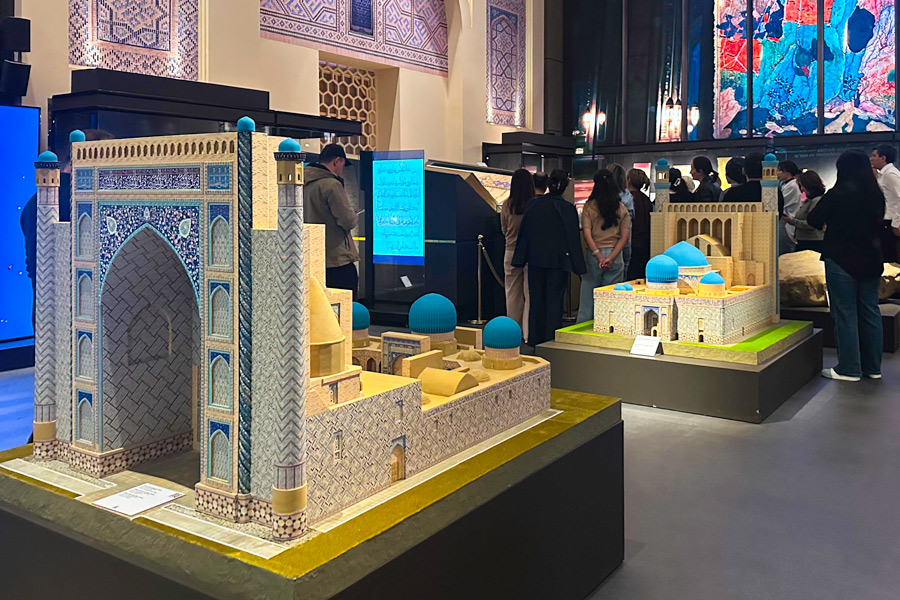
It features models of monuments such as the Bibi-Khanym Mosque, the Gur-e Amir Mausoleum, and Ulugbek’s Observatory. The works of Alisher Navoi and Ulugbek’s star catalogue are also presented.
Modern Uzbekistan
The final hall is dedicated to modern Uzbekistan. It highlights the country’s reforms, educational and scientific programs, and international cultural cooperation.
Through OLED screens, VR technologies, and interactive displays, visitors are given the opportunity to explore the exposition in greater depth. The building itself symbolizes the preservation of cultural heritage and its modern presentation.
Qur’an Hall
The heart of the Center is the Qur’an of Caliph Uthman, dating back to the 7th century and considered one of the oldest surviving copies.
The original manuscript is preserved under strict protection and cannot be viewed up close or photographed. However, its copies and multimedia materials allow visitors to study the text. Other Qur’anic manuscripts from different periods are also displayed. Previously, this Qur’an was kept in the Muyi Muborak Madrasa.
Additional Facilities
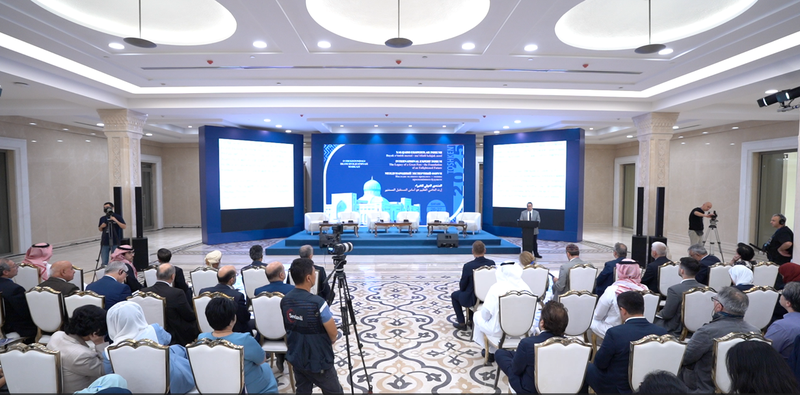
The complex is not limited to the museum. On the second floor, there is a large library containing thousands of printed and digital publications. Researchers have access to digital copies of manuscripts.
The Center also includes a manuscript restoration laboratory, conference halls, a temporary exhibition space, and a Children’s Museum. In addition, there are a café, a souvenir shop, and recreational areas.
Most read
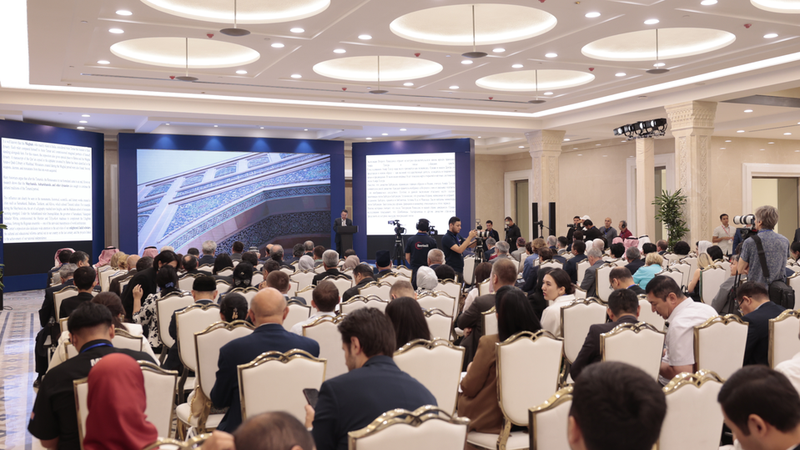
Over 100 experts from more than 20 countries of the world are in Tashkent!
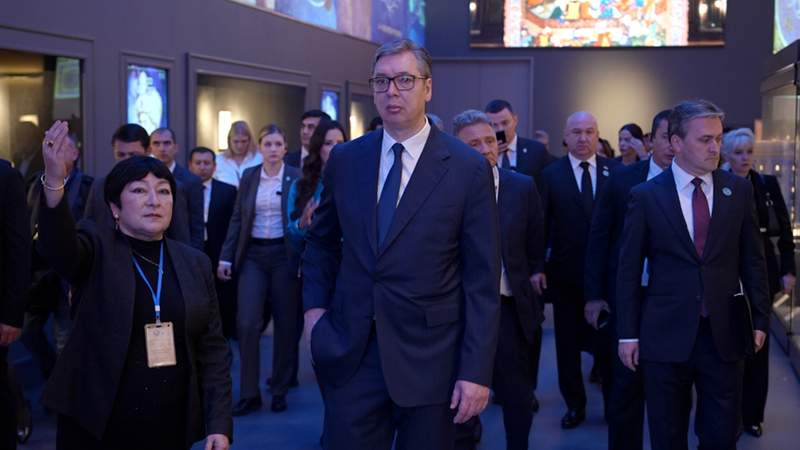
President of Serbia Aleksandar Vučić visited the Islamic Civilization Center in Uzbekistan
The Center for Islamic Civilization – a global platform leading towards enlightenment
Visit to the center
Plan your visit to the center and register.